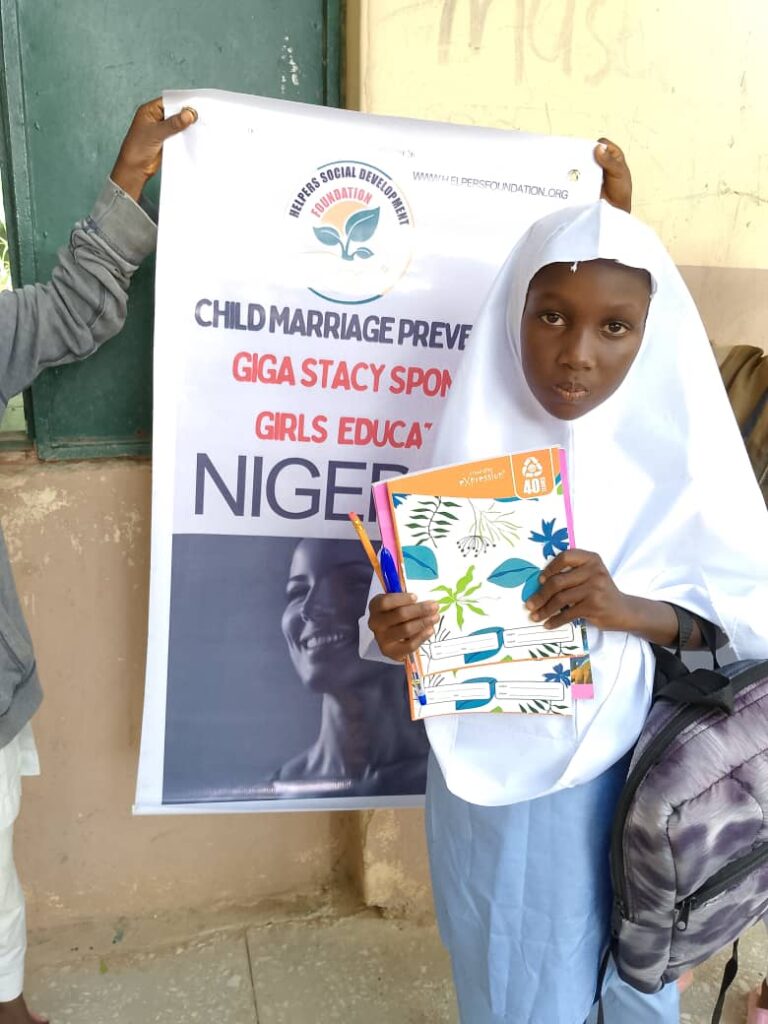
Nigeria’s Growing Population and the need to investing in educating the next generation. Nigeria is the most populous country in Africa, boasting an ever-growing population of nearly 215 million people. What’s important to note is that 42.7% of that population is younger than 14 years old (D’Ancona, 2024). Such a great number of young people could be a great asset to the country, but if there is a lack of resources and funding regarding education, the potential in the young people of Nigeria will be wasted. One of the Helpers Foundation’s main focuses is children’s education, a significant issue in Nigeria. According to UNICEF, 10.5 million children in the country are out of school. And, out of all the children in the world who are out of school, 1 in 5 are Nigerian (“Education, UNICEF Nigeria”).
It’s clear that lack of education poses a challenge to Nigeria, but there are many factors that play into this issue, like gender, poverty, geography, and simply a lack of facilities.
The Factors Impacting Nigeria’s Education
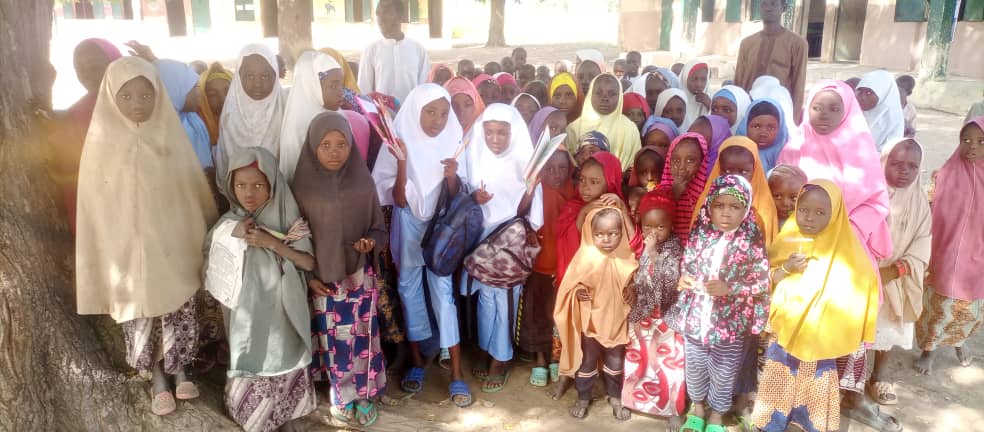 For instance, some of Nigeria’s north-east and north-west states have a female school attendance of around 50%, which means that half of the girls are not going to school (“Education, UNICEF Nigeria”). Many girls don’t attend school due to child marriage and sexual violence, while other parents also hold a negative view about girls going to school. Parents also fear sending their children (boys and girls) to school because of Boko Haram, a terrorist group, which in the past has attacked schools and abducted children. One study of Boko Haram’s impact on schooling found that, where there was conflict, there was a direct decrease in enrollment, and that the presence of the conflict decreased the number of years students completed (Bertoni et al.). Additionally, states that are in conflict have had facilities become dysfunctional, making it
impossible for children to get a quality education. In states like Borno, Yobe, and Adamawa, 802 schools are completely closed, with an additional 497 classrooms that are destroyed in some way (“Education, UNICEF Nigeria”). There is also a fault with the Nigerian government, which consistently fails to assign adequate funds to education. In 2023, it was noted that only 8% of the national budget went to the education sector, with even less than that actually reaching schools
due to corruption (D’Ancona, 2024).
The Benefits of Improving Education in Nigeria
This state of education in Nigeria helps feed the ongoing poverty, and doesn’t help to foster the potential that every child in Nigeria has. If the young people of Nigeria were given the opportunity and resources to learn and to grow, they would be able to pursue their aspirations and work towards a better future. An increase in education would mean an increase in jobs, but also a decrease in crime, poverty, and potentially child marriages and sexual violence. As the Center for African Justice says, “Education is an instrument that is capable of correcting inequality in any society” (Nawrozzada). Focusing efforts on education in Nigeria is a crucial
step in improving the lives of many young Nigerians, and Helpers Foundation is at the forefront of making that goal a reality.
Helpers Foundation’s Goal in Nigeria
Currently, Helpers Social Development Foundation established nursery and primary school that would cater to families in the remote area of Oji River. Donations to the project go directly (and completely) to essentials like books, desks, chairs, and uniforms for the children and complete the ongoing classroom building project. But Helpers Foundation needs your help to gather the resources and funds to make this Free School Project come to life and benefit the next generation, to reach out to all the less privileged in society. There are many ways to give, including through Global Giving, grant, corporate donations, birthday fundraising or other cryptocurrencies, or even directly to the Foundation’s bank account. At the Helpers Foundation, we believe that we can solve our people problems more than government.
Changing the Future of Nigeria
Whichever way you choose to contribute, be it financially or by raising awareness of this issue, know that an improvement in education in Nigeria would mean an improvement in children’s lives in Nigeria, and therefore their futures. Well-educated children can grow up to have a significant impact on the country’s economic growth and development (“The Role of
Education in Nigeria’s Future”, 2023). But on an even more basic level, it’s wrong to take these opportunities from Nigeria’s young people. Helpers Social Development Foundation believed that every child in Nigeria should have the chance to pursue education—and pursue their dreams
Sources on why you need to invest in educating the next generation
“Education | UNICEF Nigeria.” UNICEF, www.unicef.org/nigeria/education. Accessed 8 Aug. 2025.
D’Ancona, Matilde. “Unsustainable Demographics in Nigeria.” The Organization for World Peace, 26 Jan. 2024, theowp.org/reports/unsustainable-demographics-in-nigeria/.
“Education | UNICEF Nigeria.” UNICEF, www.unicef.org/nigeria/education. Accessed 8 Aug. 2025.
Nawrozzada, Selma. “Girls’ Education in Nigeria.” Centre for African Justice, centreforafricanjustice.org/girls-education-in-nigeria/. Accessed 11 Aug. 2025.
“The Role of Education in Nigeria’s Future: Why Choosing the Right Leaders Matters. – Flexisaf.” FlexiSAF Foundation, 2023,
flexisaf.org/the-role-of-education-in-nigerias-future-why-choosing-the-right-leaders-matters/.
Bertoni, Eleonora, et al. “Education is forbidden: The effect of the boko haram conflict on education in north-east Nigeria.” Journal of Development Economics, Nov. 2019, https://doi.org/10.1596/33208.